The KML Podcast


explores the transformative world of Analytical Psychology and Carl Gustav Jung through an expansive constellation of Jungian and Jungian-adjacent subjects.  Powered by the Kristine Mann Library, this ongoing series features insightful talks with diverse members of the psychological and spiritual community. We invite you to join us on multiple platforms, including YouTube and Instagram, as we continue to expand our reach into and beyond Jung’s substantial legacy.  Please share these conversations within your own community and with those who want to engage in essential questions around our collective consciousness.

"Who looks outside, dreams; who looks inside, awakes.” — C.G. Jung

You can also visit our YouTube channel and find us on Spotify.

Skip to Videos
  • Tarot at the Morgan: Renaissance Symbols, Modern Visions | KML Podcast Premiere
    10/22/26

    Tarot at the Morgan: Renaissance Symbols, Modern Visions | KML Podcast Premiere

    Missed it at the Morgan? See it here. On the closing day of Tarot! Renaissance Symbols, Modern Visions, the KML Podcast takes you through both galleries for a fast-moving journey across six centuries of tarot. For our inaugural episode, Glynis Rigsby and Matthew P. Carson join Morgan curators Joshua O’Driscoll, Frank Trujillo and Claire Gilman. Together, they trace tarot from the courts of Renaissance Italy and the Visconti-Sforza cards through its transformation from game to divinatory system—and its reinvention by artists including Pamela Colman Smith, Austin Osman Spare, Leonora Carrington, Rachel Pollack, Courtney Alexander and Chris Ofili.

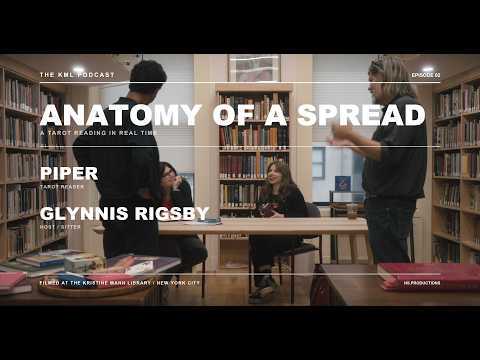
  • Anatomy of a Tarot Spread with Piper & Glynis Rigsby
    10/22/26

    Anatomy of a Tarot Spread with Piper & Glynis Rigsby

    A live tarot reading becomes a close look at how cards, questions and intuition combine to create meaning. The KML resident Tarot reader Piper gives Glynis Rigsby a live tarot reading. Our dynamic duo then retrace how the spread took shape. Moving from the Fool, Tower, Devil, and Lovers to the mechanics of the Celtic Cross, they examine intuition, interpretation, critical inquiry and the reader's responsibility to the person across the table.